Cross Beater Mill
PULVERISETTE 16
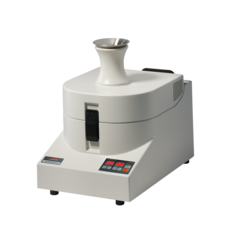
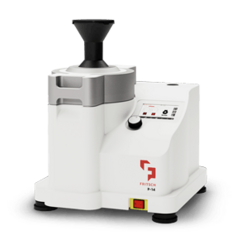
The Cross Beater Mill PULVERISETTE 16 is available in different material configurations.
Regardless of the material variant selected, the PULVERISETTE 16 is delivered with a stainless steel 5 litre collecting vessel with filter hose and a bayonet lock that ensures an especially convenient and dust-free connection. The bottom sieve must be ordered separately.
The PULVERISETTE 16 can be combined with the high-performance cyclone for sample exhaustion and a 26 litre collecting vessel with filter hose is also available for larger quantities.
Please choose from our extensive accessories at least a material configuration exactly to your specific application as well as a bottom sieve.
Cross Beater Mill PULVERISETTE 16 - material configuration
-
Material data Cross Beater Mill P-16 and application recommendation
Instrument variant Material Main component of material Abrasion resistance Density g/cm³ Suitable for comminution of Grinding insert and cross beater made of cast iron and impact plates made of hardened steel
order no. 16.6020.00Cast iron
Hardened steelFe - C
Fe - Crfairly good
good7.1
7.6medium-hard, brittle samples Grinding insert and impact plates made of hardened steel and a cross beater made of cast iron
order no. 16.6030.00Hardened steel-grinding insert
Hardened steel-impact plates
Cast ironFe - Cr
Fe - Cr
Fe - Cvery good
good
fairly good7.7
7.6
7.1hard and abrasive samples Grinding insert, cross beater and impact plates made of stainless steel
order no. 16.6050.00Stainless steel-grinding insert/cross beater
Stainless steel-impact platesFe - Cr fairly good 7.9
7.7applications in chemistry Impact plates made of heavy metal-free C60W steel, grinding insert and impact plates made of cast iron – for heavy metal-free grinding - on request
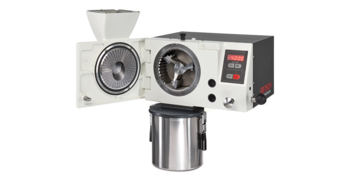
The Cross Beater Mill PULVERISETTE 16 is available in different material configurations.
Find the perfect version for your specific application.
Instrument without bottom sieve and stand, incl. collecting vessel 5 litres with filter hose
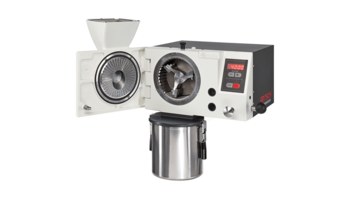
Ideal for all standard applications
This Cross Beater Mill P-16 consists of grinding insert and cross beater made of cast iron and impact plates made of hardened steel.
element analysis
The PULVERISETTE 16 is delivered with a stainless steel 5 litre collecting vessel with filter hose and a bayonet lock that ensures an especially convenient and dust-free connection. At least one bottom sieve must be ordered separately.
DETAILED INFORMATION ON THE CROSS BEATER MILL P-16
Ideal for hard and abrasive materials
This Cross Beater Mill P-16 consists of grinding insert and impact plates made of hardened steel and a cross beater made of cast iron.
element analysis
The PULVERISETTE 16 is delivered with a stainless steel 5 litre collecting vessel with filter hose and a bayonet lock that ensures an especially convenient and dust-free connection. At least one bottom sieve must be ordered separately.
DETAILED INFORMATION ON THE CROSS BEATER MILL P-16
Ideal for special applications in chemistry
This Cross Beater Mill P-16 consists of P-16 with grinding insert, cross beater and impact plates made of stainless steel.
element analysis
The PULVERISETTE 16 is delivered with a stainless steel 5 litre collecting vessel with filter hose and a bayonet lock that ensures an especially convenient and dust-free connection. At least one bottom sieve must be ordered separately.
DETAILED INFORMATION ON THE CROSS BEATER MILL P-16
BOTTOM SIEVES made of stainless steel 316L
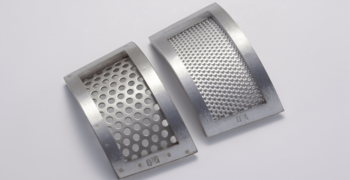
For the PULVERISETTE 16 are bottom sieves made of stainless steel either in trapezoidal or round perforations in various sizes available. In general, the finer the desired final fineness, the smaller the perforation of the bottom sieve should be; the larger the perforation, the higher the throughput.
BOTTOM SIEVES MADE OF STAINLESS STEEL 316L
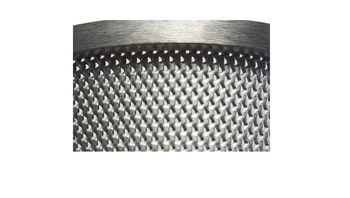
The bottom sieves are made of stainless steel trapezoidal resp. round perforation sheets of metal. Larger openings mean faster throughput, less time in the mill and less wear.
Bottom sieves with trapezoidal perforation offer an improved size reduction through extra shearing action. Bottom sieves with round perforation are recommended for size reduction of brittle material of medium fineness with smaller grain width band.
| General specifications | |
| Material | Stainless steel – 1.4404/316L |
| ISO/EN/DIN code | X2CrNiMo17-12-2 |
| Chemical composition | |
| Element | Share % |
| Iron – Fe | approx. 62.8 |
| Carbon – C | 0.03 |
| Silicon – Si | 1 |
| Manganese – Mn | 2 |
| Phosphorus – P | 0.045 |
| Sulphur – S | 0.015 |
| Chromium – Cr | 18.5 |
| Molybdenum – Mo | 2.50 |
| Nickel – Ni | 13.00 |
| Nitrogen – N | 0.110 |
| Physical and mechanical properties | |
| Density | 8.0 g/cm³ |
| Hardness | 215 HB |
Explanations on hardness data
The bottom sieves are made of stainless steel trapezoidal resp. round perforation sheets of metal. Larger openings mean faster throughput, less time in the mill and less wear.
Bottom sieves with trapezoidal perforation offer an improved size reduction through extra shearing action. Bottom sieves with round perforation are recommended for size reduction of brittle material of medium fineness with smaller grain width band.
| General specifications | |
| Material | Stainless steel – 1.4404/316L |
| ISO/EN/DIN code | X2CrNiMo17-12-2 |
| Chemical composition | |
| Element | Share % |
| Iron – Fe | approx. 62.8 |
| Carbon – C | 0.03 |
| Silicon – Si | 1 |
| Manganese – Mn | 2 |
| Phosphorus – P | 0.045 |
| Sulphur – S | 0.015 |
| Chromium – Cr | 18.5 |
| Molybdenum – Mo | 2.50 |
| Nickel – Ni | 13.00 |
| Nitrogen – N | 0.110 |
| Physical and mechanical properties | |
| Density | 8.0 g/cm³ |
| Hardness | 215 HB |
Explanations on hardness data
The bottom sieves are made of stainless steel trapezoidal resp. round perforation sheets of metal. Larger openings mean faster throughput, less time in the mill and less wear.
Bottom sieves with trapezoidal perforation offer an improved size reduction through extra shearing action. Bottom sieves with round perforation are recommended for size reduction of brittle material of medium fineness with smaller grain width band.
| General specifications | |
| Material | Stainless steel – 1.4404/316L |
| ISO/EN/DIN code | X2CrNiMo17-12-2 |
| Chemical composition | |
| Element | Share % |
| Iron – Fe | approx. 62.8 |
| Carbon – C | 0.03 |
| Silicon – Si | 1 |
| Manganese – Mn | 2 |
| Phosphorus – P | 0.045 |
| Sulphur – S | 0.015 |
| Chromium – Cr | 18.5 |
| Molybdenum – Mo | 2.50 |
| Nickel – Ni | 13.00 |
| Nitrogen – N | 0.110 |
| Physical and mechanical properties | |
| Density | 8.0 g/cm³ |
| Hardness | 215 HB |
Explanations on hardness data
The bottom sieves are made of stainless steel trapezoidal resp. round perforation sheets of metal. Larger openings mean faster throughput, less time in the mill and less wear.
Bottom sieves with trapezoidal perforation offer an improved size reduction through extra shearing action. Bottom sieves with round perforation are recommended for size reduction of brittle material of medium fineness with smaller grain width band.
| General specifications | |
| Material | Stainless steel – 1.4404/316L |
| ISO/EN/DIN code | X2CrNiMo17-12-2 |
| Chemical composition | |
| Element | Share % |
| Iron – Fe | approx. 62.8 |
| Carbon – C | 0.03 |
| Silicon – Si | 1 |
| Manganese – Mn | 2 |
| Phosphorus – P | 0.045 |
| Sulphur – S | 0.015 |
| Chromium – Cr | 18.5 |
| Molybdenum – Mo | 2.50 |
| Nickel – Ni | 13.00 |
| Nitrogen – N | 0.110 |
| Physical and mechanical properties | |
| Density | 8.0 g/cm³ |
| Hardness | 215 HB |
Explanations on hardness data
The bottom sieves are made of stainless steel trapezoidal resp. round perforation sheets of metal. Larger openings mean faster throughput, less time in the mill and less wear.
Bottom sieves with trapezoidal perforation offer an improved size reduction through extra shearing action. Bottom sieves with round perforation are recommended for size reduction of brittle material of medium fineness with smaller grain width band.
| General specifications | |
| Material | Stainless steel – 1.4404/316L |
| ISO/EN/DIN code | X2CrNiMo17-12-2 |
| Chemical composition | |
| Element | Share % |
| Iron – Fe | approx. 62.8 |
| Carbon – C | 0.03 |
| Silicon – Si | 1 |
| Manganese – Mn | 2 |
| Phosphorus – P | 0.045 |
| Sulphur – S | 0.015 |
| Chromium – Cr | 18.5 |
| Molybdenum – Mo | 2.50 |
| Nickel – Ni | 13.00 |
| Nitrogen – N | 0.110 |
| Physical and mechanical properties | |
| Density | 8.0 g/cm³ |
| Hardness | 215 HB |
Explanations on hardness data
The bottom sieves are made of stainless steel trapezoidal resp. round perforation sheets of metal. Larger openings mean faster throughput, less time in the mill and less wear.
Bottom sieves with trapezoidal perforation offer an improved size reduction through extra shearing action. Bottom sieves with round perforation are recommended for size reduction of brittle material of medium fineness with smaller grain width band.
| General specifications | |
| Material | Stainless steel – 1.4404/316L |
| ISO/EN/DIN code | X2CrNiMo17-12-2 |
| Chemical composition | |
| Element | Share % |
| Iron – Fe | approx. 62.8 |
| Carbon – C | 0.03 |
| Silicon – Si | 1 |
| Manganese – Mn | 2 |
| Phosphorus – P | 0.045 |
| Sulphur – S | 0.015 |
| Chromium – Cr | 18.5 |
| Molybdenum – Mo | 2.50 |
| Nickel – Ni | 13.00 |
| Nitrogen – N | 0.110 |
| Physical and mechanical properties | |
| Density | 8.0 g/cm³ |
| Hardness | 215 HB |
Explanations on hardness data
The bottom sieves are made of stainless steel trapezoidal resp. round perforation sheets of metal. Larger openings mean faster throughput, less time in the mill and less wear.
Bottom sieves with trapezoidal perforation offer an improved size reduction through extra shearing action. Bottom sieves with round perforation are recommended for size reduction of brittle material of medium fineness with smaller grain width band.
| General specifications | |
| Material | Stainless steel – 1.4404/316L |
| ISO/EN/DIN code | X2CrNiMo17-12-2 |
| Chemical composition | |
| Element | Share % |
| Iron – Fe | approx. 62.8 |
| Carbon – C | 0.03 |
| Silicon – Si | 1 |
| Manganese – Mn | 2 |
| Phosphorus – P | 0.045 |
| Sulphur – S | 0.015 |
| Chromium – Cr | 18.5 |
| Molybdenum – Mo | 2.50 |
| Nickel – Ni | 13.00 |
| Nitrogen – N | 0.110 |
| Physical and mechanical properties | |
| Density | 8.0 g/cm³ |
| Hardness | 215 HB |
Explanations on hardness data
The bottom sieves are made of stainless steel trapezoidal resp. round perforation sheets of metal. Larger openings mean faster throughput, less time in the mill and less wear.
Bottom sieves with trapezoidal perforation offer an improved size reduction through extra shearing action. Bottom sieves with round perforation are recommended for size reduction of brittle material of medium fineness with smaller grain width band.
| General specifications | |
| Material | Stainless steel – 1.4404/316L |
| ISO/EN/DIN code | X2CrNiMo17-12-2 |
| Chemical composition | |
| Element | Share % |
| Iron – Fe | approx. 62.8 |
| Carbon – C | 0.03 |
| Silicon – Si | 1 |
| Manganese – Mn | 2 |
| Phosphorus – P | 0.045 |
| Sulphur – S | 0.015 |
| Chromium – Cr | 18.5 |
| Molybdenum – Mo | 2.50 |
| Nickel – Ni | 13.00 |
| Nitrogen – N | 0.110 |
| Physical and mechanical properties | |
| Density | 8.0 g/cm³ |
| Hardness | 215 HB |
Explanations on hardness data
The bottom sieves are made of stainless steel trapezoidal resp. round perforation sheets of metal. Larger openings mean faster throughput, less time in the mill and less wear.
Bottom sieves with trapezoidal perforation offer an improved size reduction through extra shearing action. Bottom sieves with round perforation are recommended for size reduction of brittle material of medium fineness with smaller grain width band.
| General specifications | |
| Material | Stainless steel – 1.4404/316L |
| ISO/EN/DIN code | X2CrNiMo17-12-2 |
| Chemical composition | |
| Element | Share % |
| Iron – Fe | approx. 62.8 |
| Carbon – C | 0.03 |
| Silicon – Si | 1 |
| Manganese – Mn | 2 |
| Phosphorus – P | 0.045 |
| Sulphur – S | 0.015 |
| Chromium – Cr | 18.5 |
| Molybdenum – Mo | 2.50 |
| Nickel – Ni | 13.00 |
| Nitrogen – N | 0.110 |
| Physical and mechanical properties | |
| Density | 8.0 g/cm³ |
| Hardness | 215 HB |
Explanations on hardness data
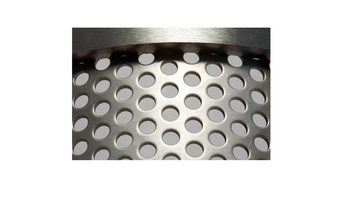
The bottom sieves are made of stainless steel trapezoidal resp. round perforation sheets of metal. Larger openings mean faster throughput, less time in the mill and less wear.
Bottom sieves with trapezoidal perforation offer an improved size reduction through extra shearing action. Bottom sieves with round perforation are recommended for size reduction of brittle material of medium fineness with smaller grain width band.
| General specifications | |
| Material | Stainless steel – 1.4404/316L |
| ISO/EN/DIN code | X2CrNiMo17-12-2 |
| Chemical composition | |
| Element | Share % |
| Iron – Fe | approx. 62.8 |
| Carbon – C | 0.03 |
| Silicon – Si | 1 |
| Manganese – Mn | 2 |
| Phosphorus – P | 0.045 |
| Sulphur – S | 0.015 |
| Chromium – Cr | 18.5 |
| Molybdenum – Mo | 2.50 |
| Nickel – Ni | 13.00 |
| Nitrogen – N | 0.110 |
| Physical and mechanical properties | |
| Density | 8.0 g/cm³ |
| Hardness | 215 HB |
Explanations on hardness data
The bottom sieves are made of stainless steel trapezoidal resp. round perforation sheets metal. Larger openings mean faster throughput, less time in the mill and less wear.
Bottom sieves with trapezoidal perforation offer an improved size reduction through extra shearing action. Bottom sieves with round perforation are recommended for size reduction of brittle material of medium fineness with smaller grain width band.
| General specifications | |
| Material | Stainless steel – 1.4404/316L |
| ISO/EN/DIN code | X2CrNiMo17-12-2 |
| Chemical composition | |
| Element | Share % |
| Iron – Fe | approx. 62.8 |
| Carbon – C | 0.03 |
| Silicon – Si | 1 |
| Manganese – Mn | 2 |
| Phosphorus – P | 0.045 |
| Sulphur – S | 0.015 |
| Chromium – Cr | 18.5 |
| Molybdenum – Mo | 2.50 |
| Nickel – Ni | 13.00 |
| Nitrogen – N | 0.110 |
| Physical and mechanical properties | |
| Density | 8.0 g/cm³ |
| Hardness | 215 HB |
Explanations on hardness data
The bottom sieves are made of stainless steel trapezoidal resp. round perforation sheets of metal. Larger openings mean faster throughput, less time in the mill and less wear.
Bottom sieves with trapezoidal perforation offer an improved size reduction through extra shearing action. Bottom sieves with round perforation are recommended for size reduction of brittle material of medium fineness with smaller grain width band.
| General specifications | |
| Material | Stainless steel – 1.4404/316L |
| ISO/EN/DIN code | X2CrNiMo17-12-2 |
| Chemical composition | |
| Element | Share % |
| Iron – Fe | approx. 62.8 |
| Carbon – C | 0.03 |
| Silicon – Si | 1 |
| Manganese – Mn | 2 |
| Phosphorus – P | 0.045 |
| Sulphur – S | 0.015 |
| Chromium – Cr | 18.5 |
| Molybdenum – Mo | 2.50 |
| Nickel – Ni | 13.00 |
| Nitrogen – N | 0.110 |
| Physical and mechanical properties | |
| Density | 8.0 g/cm³ |
| Hardness | 215 HB |
Explanations on hardness data
The bottom sieves are made of stainless steel trapezoidal resp. round perforation sheets of metal. Larger openings mean faster throughput, less time in the mill and less wear.
Bottom sieves with trapezoidal perforation offer an improved size reduction through extra shearing action. Bottom sieves with round perforation are recommended for size reduction of brittle material of medium fineness with smaller grain width band.
| General specifications | |
| Material | Stainless steel – 1.4404/316L |
| ISO/EN/DIN code | X2CrNiMo17-12-2 |
| Chemical composition | |
| Element | Share % |
| Iron – Fe | approx. 62.8 |
| Carbon – C | 0.03 |
| Silicon – Si | 1 |
| Manganese – Mn | 2 |
| Phosphorus – P | 0.045 |
| Sulphur – S | 0.015 |
| Chromium – Cr | 18.5 |
| Molybdenum – Mo | 2.50 |
| Nickel – Ni | 13.00 |
| Nitrogen – N | 0.110 |
| Physical and mechanical properties | |
| Density | 8.0 g/cm³ |
| Hardness | 215 HB |
Explanations on hardness data
The bottom sieves are made of stainless steel trapezoidal resp. round perforation sheets of metal. Larger openings mean faster throughput, less time in the mill and less wear.
Bottom sieves with trapezoidal perforation offer an improved size reduction through extra shearing action. Bottom sieves with round perforation are recommended for size reduction of brittle material of medium fineness with smaller grain width band.
| General specifications | |
| Material | Stainless steel – 1.4404/316L |
| ISO/EN/DIN code | X2CrNiMo17-12-2 |
| Chemical composition | |
| Element | Share % |
| Iron – Fe | approx. 62.8 |
| Carbon – C | 0.03 |
| Silicon – Si | 1 |
| Manganese – Mn | 2 |
| Phosphorus – P | 0.045 |
| Sulphur – S | 0.015 |
| Chromium – Cr | 18.5 |
| Molybdenum – Mo | 2.50 |
| Nickel – Ni | 13.00 |
| Nitrogen – N | 0.110 |
| Physical and mechanical properties | |
| Density | 8.0 g/cm³ |
| Hardness | 215 HB |
Explanations on hardness data
The bottom sieves are made of stainless steel trapezoidal resp. round perforation sheets of metal. Larger openings mean faster throughput, less time in the mill and less wear.
Bottom sieves with trapezoidal perforation offer an improved size reduction through extra shearing action. Bottom sieves with round perforation are recommended for size reduction of brittle material of medium fineness with smaller grain width band.
| General specifications | |
| Material | Stainless steel – 1.4404/316L |
| ISO/EN/DIN code | X2CrNiMo17-12-2 |
| Chemical composition | |
| Element | Share % |
| Iron – Fe | approx. 62.8 |
| Carbon – C | 0.03 |
| Silicon – Si | 1 |
| Manganese – Mn | 2 |
| Phosphorus – P | 0.045 |
| Sulphur – S | 0.015 |
| Chromium – Cr | 18.5 |
| Molybdenum – Mo | 2.50 |
| Nickel – Ni | 13.00 |
| Nitrogen – N | 0.110 |
| Physical and mechanical properties | |
| Density | 8.0 g/cm³ |
| Hardness | 215 HB |
Explanations on hardness data
Bottom sieves made of chromium-free steel DC01Cu for heavy-metal-free grinding
The bottom sieves are made of chromium-free steel DC01Cu trapezoidal resp. round perforation sheets of metal. Larger openings mean faster throughput, less time in the mill and less wear.
Bottom sieves with trapezoidal perforation offer an improved size reduction through extra shearing action. Bottom sieves with round perforation are recommended for size reduction of brittle material of medium fineness with smaller grain width band.
| General specifications | |
| Material | Construction steel - 1.0330 - not rust-proof |
| ISO/EN/DIN code | DC01, EN 1013 |
| Chemical composition | |
| Element | Share % |
| Iron – Fe | 99.19 |
| Carbon – C | 0.12 |
| Manganese – Mn | 0.6 |
| Phosphorus – P | 0.045 |
| Sulphur – S | 0.045 |
| Physical and mechanical properties | |
| Density | 7.85 g/cm³ |
| Hardness | 86 HRA |
Explanations on hardness data
The bottom sieves are made of chromium-free steel DC01Cu trapezoidal resp. round perforation sheets of metal. Larger openings mean faster throughput, less time in the mill and less wear.
Bottom sieves with trapezoidal perforation offer an improved size reduction through extra shearing action. Bottom sieves with round perforation are recommended for size reduction of brittle material of medium fineness with smaller grain width band.
| General specifications | |
| Material | Construction steel - 1.0330 - not rust-proof |
| ISO/EN/DIN code | DC01, EN 1013 |
| Chemical composition | |
| Element | Share % |
| Iron – Fe | 99.19 |
| Carbon – C | 0.12 |
| Manganese – Mn | 0.6 |
| Phosphorus – P | 0.045 |
| Sulphur – S | 0.045 |
| Physical and mechanical properties | |
| Density | 7.85 g/cm³ |
| Hardness | 86 HRA |
Explanations on hardness data
The bottom sieves are made of chromium-free steel DC01Cu trapezoidal resp. round perforation sheets of metal. Larger openings mean faster throughput, less time in the mill and less wear.
Bottom sieves with trapezoidal perforation offer an improved size reduction through extra shearing action. Bottom sieves with round perforation are recommended for size reduction of brittle material of medium fineness with smaller grain width band.
| General specifications | |
| Material | Construction steel - 1.0330 - not rust-proof |
| ISO/EN/DIN code | DC01, EN 1013 |
| Chemical composition | |
| Element | Share % |
| Iron – Fe | 99.19 |
| Carbon – C | 0.12 |
| Manganese – Mn | 0.6 |
| Phosphorus – P | 0.045 |
| Sulphur – S | 0.045 |
| Physical and mechanical properties | |
| Density | 7.85 g/cm³ |
| Hardness | 86 HRA |
Explanations on hardness data
Sample exhaustion with cyclone
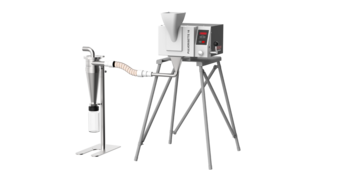
The combination of the Cross Beater Mill with the high-performance cyclone enable a simple cleaning and feeding, the use of finer bottom sieves for achieving a higher final fineness, increases the throughput and reduces the thermal load of the samples – even for materials, which are otherwise difficult to grind.
High-performance cyclone
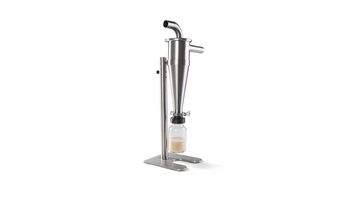
The Fritsch high-performance cyclone completely made of stainless steel 316L is indispensable in many industries. Due to its high surface quality, it offers enhanced resistance to corrosive media such as alkalis and acids and is especially easy to clean with a wide range of possible cleaning agents, without leaving any residues. The comminuted sample is drawn into a screwed-on collecting vessel or in a smaller sample glass, in which it can also be transported and stored. In addition, it can be completely dismantled, fully emptied, flooded and sterilised, and thus offers reliable protection against cross-contamination.
The advantages of the high-performance cyclone at a glance
- Faster throughput
- Improved discharge of material from the grinding chamber
- Additional strong cooling of the grinding material and grinding parts
- Efficient size reduction of temperature-sensitive samples, electrostatically-charged plastics or powder coatings
- Ideal for light materials, small sample quantities and finer sieve sizes
- Highly efficient continuous comminution of large quantities
| General specifications | |
| Material | Stainless steel – 1.4301 |
| ISO/EN/DIN code | X5CrNi1810 |
| Chemical composition | |
| Element | Share % |
| Iron – Fe | 66.805 |
| Carbon – C | 0.070 |
| Silicon – Si | 1.000 |
| Manganese – Mn | 2.000 |
| Phosphorus – P | 0.045 |
| Sulphur – S | 0.030 |
| Chromium – Cr | 19.5 |
| Nickel – Ni | 10.5 |
| Nitrogen – N | 0.110 |
| Physical and mechanical properties | |
| Density | 7.8 g/cm³ |
| Hardness | HRB 96 |
Explanations on hardness data
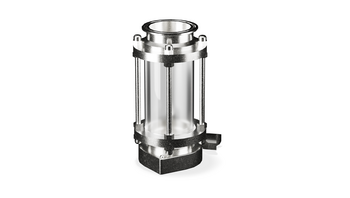
Inline sight glass 316L for visual inspection of sample exhaustion, possible applications:
• Cutting Mill P-19: between high-performance cyclone (19.1907.00) and collecting vessel 60 litres (45.8050.00)
• Cutting Mill P-19 large: between high-performance cyclone (19.4907.00) and collecting vessel 60 litres (45.8050.00)
• Rotor Mills P-14 and P-16: between the respective high-performance cyclone and collecting vessel 60 litres
• Disk Mill P-13 premium and P-13: between the respective high-performance cyclone and collecting vessel 60 litres
Ideal for observing the material flow during sample exhaustion.
Collecting Vessels for High-performance cyclone
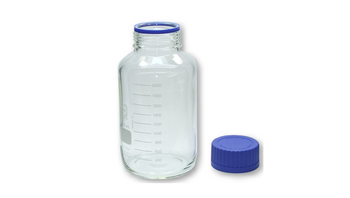
Sample glass 1 litre for sample exhaustion with the high-performance cyclones.
The sample glass with 2 litres volume is recommended for sample exhaustion with the high-performance cyclones for sample discharges larger than 1000 ml, since only a 1 litre sample glass is included in the delivery of the high-performance cyclones.
The sample glass with 5 litres volume is recommended for sample exhaustion with the high-performance cyclones for sample discharges larger than 1000 ml, since only a 1 litre sample glass is included in the delivery of the high-performance cyclones.
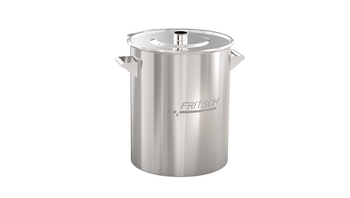
The collecting vessel 20 litres is recommended for sample exhaustion with the high-performance cyclone for sample discharges larger than 1000 ml, since only a 1 litre sample glass is included in the delivery of the high-performance cyclone.
| General specifications | |
| Material | Stainless steel – 1.4404/316L |
| ISO/EN/DIN code | X2CrNiMo17-12-2 |
| Chemical composition | |
| Element | Share % |
| Iron – Fe | approx. 62.8 |
| Carbon – C | 0.03 |
| Silicon – Si | 1 |
| Manganese – Mn | 2 |
| Phosphorus – P | 0.045 |
| Sulphur – S | 0.015 |
| Chromium – Cr | 18.5 |
| Molybdenum – Mo | 2.50 |
| Nickel – Ni | 13.00 |
| Nitrogen – N | 0.110 |
| Physical and mechanical properties | |
| Density | 8.0 g/cm³ |
| Hardness | 215 HB |
Explanations on hardness data
The collecting vessel 60 litres is recommended for sample exhaustion with the high-performance cyclones for sample discharges larger than 1000 ml, since only a 1 litre sample glass is included in the delivery of the high-performance cyclones.
The collecting vessel 60 litres can not be used due to its size in combination with the high-performance cyclones with solid piping, order no. 19.1940.00 (P-19) or order no. 19.1947.00 (P-19 large).
| General specifications | |
| Material | Stainless steel – 1.4404/316L |
| ISO/EN/DIN code | X2CrNiMo17-12-2 |
| Chemical composition | |
| Element | Share % |
| Iron – Fe | approx. 62.8 |
| Carbon – C | 0.03 |
| Silicon – Si | 1 |
| Manganese – Mn | 2 |
| Phosphorus – P | 0.045 |
| Sulphur – S | 0.015 |
| Chromium – Cr | 18.5 |
| Molybdenum – Mo | 2.50 |
| Nickel – Ni | 13.00 |
| Nitrogen – N | 0.110 |
| Physical and mechanical properties | |
| Density | 8.0 g/cm³ |
| Hardness | 215 HB |
Explanations on hardness data
Exhaust system for High-performance cyclone
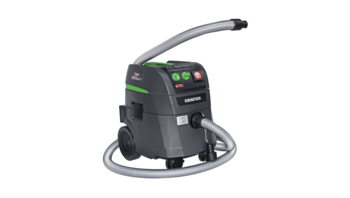
The exhaust system, dust category "M" according to DIN EN 60335-2-69 for 230 V/1~, 50/60 Hz, 1600 Watt is versatile:
For combination with the high performance and small volume cyclones.
To operate the FRITSCH Cyclones you need an exhaust system. The strong airflow ensures simple feeding, increases throughput, and reduces the thermal load of the samples. The high performance cyclones and the small volume cyclonecan be combined with Universal Cutting Mills PULVERISETTE 19, the Rotor Mill P-14 and the Variable Speed Rotor Mill PULVERISETTE 14 classic line. The small volume cyclone can also be combined with the Rotor Mill P-14 premium line and Variable Speed Rotor Mill PULVERISETTE 14 classic line even for passive utilisation – without sample exhaust.
The high-performance cyclone is ideal for combination with the Universal Cutting Mills PULVERISETTE 19 large, the Cross Beater Mill PULVERISETTE 16 and the Disk Mill PULVERISETTE 13 premium line for optimal sample extraction and for comminution of larger quantities.
For cooling of the Rotor Mill P-14
By connecting the exhaust system with the connecting piece order no. 14.8128.00, the cooling of the mill can easily be enhanced.
For connecting to Disk Mill PULVERISETTE 13 premium line
The exhaust is simply connected to the PULVERISETTE 13 premium line and operated via a start and stop button on the instrument – for dust free comminution.
For connecting to the Jaw Crusher PULVERISETTE 1, Modell I + II classic line
Simply connect the exhaust system to the integrated connection of the PULVERISETTE 1. Fine dust arising during comminution is automatically removed. The exhaust system is also very useful when cleaning the grinding parts.
For connecting to the Disk Mill PULVERISETTE 13 classic line
The exhaust system can be easily connected to the PULVERISETTE 13 classic line. Fine dust arising during comminution is automatically removed. The exhaust system is also very useful when cleaning the grinding parts.
For exhaustion of the sample during dry measurement with the Laser Particle Sizers ANALYSETTE 22 NeXT
An exhaust system is necessary to ensure automatic sample exhaustion during dry measurement. When the measurement is completed it can also be easily used to manually clean the feeder.
Please note that the exhaust system article no. 43.9070.00, is not equipped with a fine filter and therefore dust may escape. Please consider the valid occupational health and safety regulations. This exhaust system is mostly recommended for dust-free grinding and the vacuuming of during the process developing fine dust in the upper part of the grinding chamber and for the cleaning of the grinding parts.
For vacuuming of the sample during dry measurement with the Laser Particle Sizers ANALYSETTE 22 NeXT, we recommended we recommend the exhaust system article no. 43.9060.00, which is equipped with a hose and an ultra-fine filter of dust class "H" according to DIN EN 60335-2-69, so that the escape of fine dust is reduced.
1 pack = 5 pieces
One pack is included in the scope of delivery of the exhaust system (article No. 43.9070.00).
These fleece filter bags should be used for the vacuuming off of fine, dry materials.
For the vacuuming off of coarse, wet materials are plastic bags available (article no. 43.9052.00).
1 pack = 5 pieces
One pack is included in the order of the exhaust system (article No. 43.9070.00).
These plastic bags should be used for the vacuuming off of coarse, wet materials.
For the vacuuming off of fine, dry materials are paper filter bags available (article no. 43.9055.00).
1 pack = 2 pieces
One filter set is included in the order of the exhaust system (article No. 43.9070.00).
FURTHER ACCESSORIES
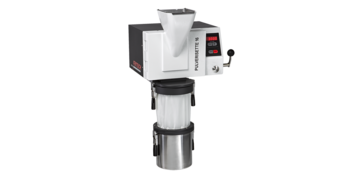
The standard equipment delivered with the PULVERISETTE 16 includes a cloth filter hose between the mill and the 5 litre collecting vessel that ensures a constant airflow in the grinding chamber; accelerates the throughput and prevents blockages – for fast, gentle comminution.
We also offer a 26 litre collecting vessel for grinding larger quantities.
Combine your PULVERISETTE 16 with a support stand for a stand-alone instrument that you can place anywhere. A certificate for IQ/OQ documentation is also available.
UNIVERSAL SUPPORT STAND AND COLLECTING VESSEL
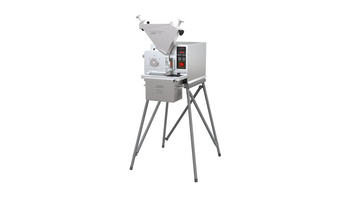
Stand for free installation of the following devices:
Universal Cutting Mill PULVERISETTE 19 variable speed 300-3000 rpm
Universal Cutting Mill PULVERISETTE 19 variable speed 50-700 rpm
Universal Cutting Mill PULVERISETTE 19 variable speed 50-700 rpm large
Universal Cutting Mill PULVERISETTE 19 variable speed 300-3000 rpm Large
Cross Beater Mill PULVERISETTE 16 with grinding insert made of cast iron
Cross Beater Mill PULVERISETTE 16 with grinding insert made of stainless steel
The PULVERISETTE 19 is shown as an example in the photo.
As standard the PULVERISETTE 16 is delivered with a collecting vessel 5 litres. For grinding large quantities this collecting vessel with a capacity of 26 litres and filter hose is recommended.
IQ/OQ documentation (questionnaire format - implementation by customer) for the independent utilization for the support of instrument qualification in the quality management system for the Cross Beater Mill PULVERISETTE 16.